
Welcome To
Hong Kong Green Innovation Development Institute (HKGIDI)
Solar Power

Wind Power

Hydropower
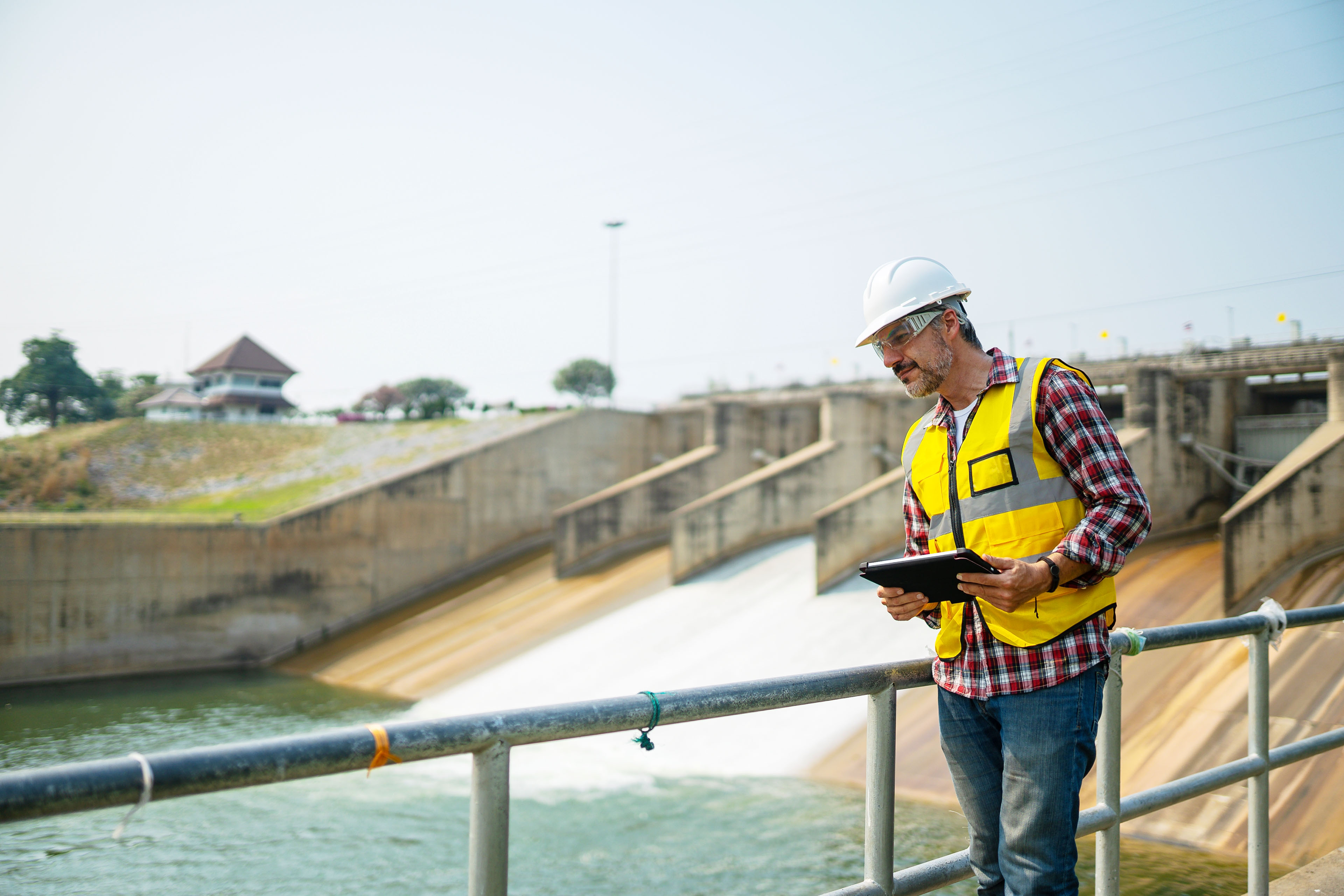
Waste Recycling

Our Focus Areas
Promote Green Technologies And Sustainable Transformation
Strengthening Local Expertise
International Training Base
Deepening Mainland Cooperation

International Collaboration
A Platform For International Knowledge And Technology Exchange.
Becoming an International Environmental Training Base
Facilitating Exchange with Mainland and Regional Counterparts
Application Fees
The prescribed application fees are as follows. (Note: The application fee paid is non-refundable, regardless of whether the application is successful.)
| Type of application | Prescribed Fee (HKD) | ||
| 1 class | 2 classes | 3 classes | |
| Application for registration | $4,720 | $5,230 | $5,730 |
| Registration & issuance of registration card | $575 | ||
| Application for renewal | $1,240 | $1,430 | $1,630 |
| Renewal of registration & issuance of registration card | $575 | ||
| Application for replacement of registration card | $575 | ||
Upon receipt of the payment notice issued by the EPD, the applicant may make payment by following the instructions on the overleaf of the notice.
Applications for renewal of registration should be submitted within the period of at least 1 month and no more than 4 months before the expiry date of the current registration. Please note that under section 11(3) of the Environmental Services (Registered Environmental Engineers) Regulation (Cap. 95G), an application for renewal must be made within the period specified by the Director. Generally, the registration of an REE will be valid for a period of 5 years.
Basic Requirements
Regarding registration, EPD imposes strict requirements for applicants' qualifications and relevant working experience, and has also set requirements on the completion of specified courses. The course content encompasses professional knowledge relevant to the duties of REEs and applicants must pass an assessment to complete the course. In addition, all applicants must pass a professional interview to ensure that they are fully capable of discharging the duties of REEs. The registration requirements are as follows:
| Air Modelling | Noise Modelling | EIA Professionals | |
| Academic background | HKIE / HKIQEP recognized degree or equivalent as accepted by these institutions | A degree in the environmental/engineering-related fields | |
| Working experience | Nil Employment in environmental industry is preferred. | At least 2 years (24 months) relevant work experience in environmental planning / engineering fields | |
| Membership | Student Membership for HKIE / HKIQEP is preferred | Associate, Professional, or Fellow Member of HKIQEP/HKIE | |
Professional Development Course
Air Modelling
- Air Pollution, Air Policy, Legislations, and Requirements (3 hours)To understand air pollution, its related policy and legislations, and the requirements of air quality impact assessments.
- Air Pollution
- Air Quality Policy, Legislations, Standards and Criteria
- Air Quality Modelling Practices and Guidelines for Air Quality Assessment.
- Emission Estimation and Implementation (3 hours)To understand the requirements of emission calculations in air quality impact assessments
- Anthropogenic, biogenic and natural emissions
- Emission processing/modelling and forecasting
- Application of emission models and emission factors
- Fundamental of Air Modelling (12 hours)To understand the fundamental of atmospheric science, pollutant transport processes, and Gaussian models.
- Atmospheric Structure and Dynamics
- Plume Rise, Settling and Deposition, Chemical Processes
- Gaussian Dispersion Models
- Practical Session Session (12 hours)To understand the applications of SAMP, good practices in emission calculations and model submission, frequent mistakes, and SP applications.
- Application of Smart Air Modeling Platform (SAMP)
- Preparation of emission on SAMP, good practices in emission calculations
- Good practices in model submission, frequent mistakes
- SP License related modelling requirement and applications
- Case Studies and Practical Applications
- Other Models and Modelling Related Issues (10 hours)To understand the applications of other air quality models and other related issues.
- Box models
- Physical modelling
- Numerical dispersion model
- Reginal scale air quality model
- Other related issues
Noise Modelling
- Noise Modelling Knowledge (6 hours)Understand the fundamentals and applications of noise assessment and modelling.
- Noise Descriptors
- Typical environmental noise component and attributes
- Typical noise emission and propagation concept
- Noise mitigation measures: application approaches, alternative consideration, design, implementation, and verification
- Understanding of engineering drawings
- Road Traffic Noise Model (8 hours)Develop knowledge and skills to build a noise model for road traffic noise impact assessment.
- Methodology for road traffic noise impact assessment
- Acceptance criteria and guidelines for road traffic noise impact assessment
- Data acquisition for noise modelling
- Consideration of Noise Mitigation Measures
- Modelling techniques and software applications
- Hands on sessions for building noise model
- Application of Web-NAT
- Construction Noise Model (6 hours)Develop knowledge and skills to build a noise model for construction noise impact assessment.
- Methodology for construction noise impact assessment
- Acceptance criteria and guidelines for construction noise impact assessment
- Data acquisition for noise modelling
- Consideration of Noise Mitigation Measures and/or alternative construction method
- Modelling techniques and software applications
- Hands on sessions for building noise model
- Application of Web-CNMP and e-CNP
- Fixed Noise Source Model (6 hours)Develop knowledge and skills to build a noise model for fixed noise sources impact assessment.
- Identification of common fixed noise sources (e.g. HVAC, industrial)
- Methodology for fixed noise sources impact assessment
- Acceptance criteria and guidelines for fixed noise sources impact assessment
- Data acquisition for noise modelling
- Consideration of Noise Mitigation Measures
- Modelling techniques and software applications
- Hands on sessions for building noise model
- Quality Management and Data Interpretation Skills (4 hours)Develop quality management practices for noise assessment. Enhance data interpretation and reporting skills.
- Quality management of input data and model results
- Common Errors for noise modelling
- Open Data sources for building noise models
- Presentation of model results in report and electronic platform including Geographic Information System, Building Information modeling, etc.
- Railway Noise Model (5 hours)Develop knowledge and skills to build a noise model for railway noise impact assessment.
- Methodology for railway noise impact assessment
- Acceptance criteria and guidelines for railway noise impact assessment
- Data acquisition for noise modelling
- Consideration of Noise Mitigation Measures
- Modelling techniques and software applications
- Hands on sessions for building noise model
- Aircraft Noise and Helicopter Noise Model (5 hours)Develop knowledge and skills to build a noise model for aircraft noise and helicopter noise impact assessment.
- Characteristics of aircraft noise and helicopter noise
- Methodology for aircraft and helicopter noise impact assessment
- Acceptance criteria and guidelines for aircraft and helicopter impact assessment
- Data acquisition for noise modelling
- Modelling techniques and software applications
- Hands on sessions for building noise model
- Noise Mapping (5 hours)Develop knowledge and skills on territory wide noise mapping.
- Fundamentals of noise mapping
- Methodology for noise mapping
- Acceptance criteria and guidelines for noise mapping
- Tools and software for noise mapping
- Presentation of noise mapping
- Applications in urban planning and policy development
EIA Professionals
- Fundamentals of EIA (3 hours)
- Origins of EIA
- Basic principles of EIA
- Latest international development and emerging issues of EIA
- EIA System under EIAO in Hong Kong (9 hours)
- EIAO overview
- Schedules 2/3 Designated Projects of EIAO
- Technical Memorandum on EIA Process: Overview, Criteria, and Guidelines
- Role of EIA Experts of HKIQEP and Engineering EIA Professional of HKIE
- Role of Advisory Council on the Environment
- Public participation and stakeholder engagement strategy
- Legal challenges of EIAO
- EIA – Impact Assessment (19 hours)
- Preparation of Project Profile
- Compliance of EIA Study Brief
- Assessment Methodologies (Baseline survey, Literature review, Quantitative modelling)
- Smart AI Tools for Impact Assessment (Hong Kong Environmental Database, AI Applications for analysis)
- Understanding project and environmental benefits
- Impact Assessments on environmental aspects (Air Quality and Hazard to Life, Noise, Water Quality, Waste Management and Land Contamination, Ecology, Cultural Heritage, Landscape and Visual)
- Innovative environmental enhancement measures
- Organized reasoning and EIA report writing
- EIA Report Quality Assurance
- EM&A and EIA Follow-up (3 hours)
- Principles of EM&A and EIA follow-up
- Compliance of Environmental Permit
- Roles of EM&A personnels
- AI technologies in EM&A
- EIA in Practice (6 hours)
- Case Study – Development of Tseung Kwan O Area 137 and Associated Reclamation Sites
- Technical Visit – Ecological Enhancement Areas under the Sheung Shui to Lok Ma Chau Spur Line
Enrolment Procedures
- Applicants who are interested in enrolling in the course should complete the following application form and email it to enquiry@epd.gov.hk.
- Applicants must ensure that the information provided is complete and accurate, failing which may affect the processing of their applications.
- Applicants are required to pass an interview to confirm that they possess a certain level of knowledge in environmental engineering.
- Upon admission, applicants will be issued a payment notice by email. They must settle the payment by the specified deadline in accordance with the instructions, and EPD will acknowledge by email upon receipt of the fees.
- If applicants fail to settle the payment within the specified period, their applications will be cancelled after the specified deadline.
- All fees paid are not refundable.
- Deadline of application: 24 October 2025 (on a first-come, first-served basis).
Contact Us
Frequently Asked Questions
| Question 1: | Can an REE be qualified in all three registration classes at the same time? |
| Answer: | Yes, an applicant can be registered as an REE in all three classes at the same time provided that he/she fulfils the qualification and experience requirements for each class and passes the professional interview. |
| Question 2: | If an REE is qualified in all three registration classes, can he/she be responsible for handling the same project in different capacities? |
| Answer: | Yes, but the REE concerned must comply with the requirements regarding handling of conflict of interest. In addition, EPD must conduct audit check on the certificates issued by the REE concerned for the same project, and will take appropriate follow-up action if any non-compliance with requirements is identified. |
| Question 3: | Are there any specified courses or other courses recognised as equivalent by the Director available on the market for individuals interested in applying for registration to enrol? |
| Answer: | Currently, there are no courses on the market recognised as equivalent by the Director. To provide facilitation for individuals interested in applying for registration, EPD will provide a Professional Development Course. Applicants can fulfil the registration requirements by completing the Professional Development Course and passing the relevant assessments. |